EventExhibitions
The Cult of Beauty
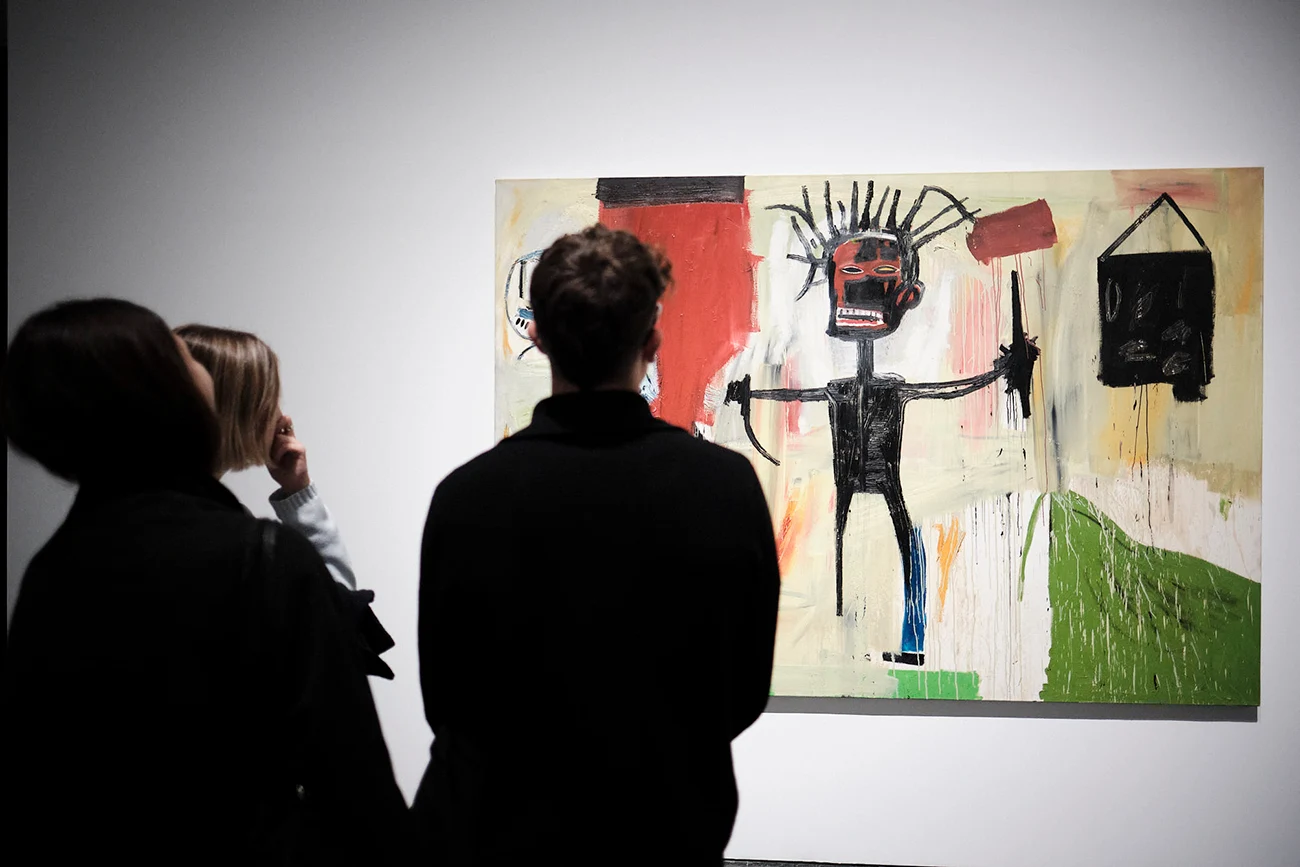
An afternoon for questioning what we call beautiful. Take the exhibition’s questions out into the Raval afterwards.
The Barcelona edit
Your Barcelona day starts here. Today’s scheduled events appear first, followed by places, food stops and evening ideas. Check each venue’s hours before heading out.
An afternoon for questioning what we call beautiful. Take the exhibition’s questions out into the Raval afterwards.
The final week of MACBA’s collection presentation. Choose a few works to stay with, rather than racing to see the lot.
Lolita Flores gives Lorca’s servant a voice of her own in Luis Luque’s solo production. A Spanish-language evening built around the grief and silences of Bernarda Alba’s household.
A grown-up Pinocchio becomes a puppet maker and retells his adventures with the Cricket. La Puntual’s Catalan-language family production is recommended from age three and gives the familiar story a workshop setting.
Audience suggestions become the raw material for an evening of improvised comedy. The performers build characters and situations in real time, so returning visitors will encounter a different show.
José Sacristán revisits Fernando Fernán-Gómez’s memories in a solo tribute at the Romea. Theatre history becomes personal through stories of family, survival and the desire to find a place onstage.
A couple pretend to separate to escape holiday plans with another family. Their small deception opens up much larger tensions in a comedy about friendship, parenting and social obligation.
Three siblings meet to decide how to care for their elderly father, and old resentments resurface. Cesc Gay’s family comedy makes an apparently practical conversation the trigger for a much larger reckoning.
Marta Pazos directs Brecht and Weill’s sharp musical portrait of power and money, with musical direction by Dani Espasa. The Catalan production offers Spanish and English surtitles on selected Saturdays.
Palau Robert looks back over two decades of mobile technology and its social consequences. Projects in health, mobility and agriculture make the subject tangible, while the exhibition also invites questions about the future.
French pyrotechnic company Fwf Concept opens the two-night International Fireworks Festival. Head towards the Espigó del Gas area for an outdoor display that makes the waterfront part of La Mercè.
Four exhibitions from the 1950s provide new ways into Tàpies’s work. The museum connects his changing methods to architecture, publishing and urban life, making context as important as individual objects.
Six themes introduce the ideas of architect and landscape designer Nicolau Maria Rubió i Tudurí. The free exhibition links Barcelona’s gardens and public spaces to present-day questions about climate and city life.
Young theatre-makers try to revive a 1979 Teatre Lliure production in Miquel Mas Fiol’s Catalan-language play. Collective ambition meets nostalgia in a story about making work together.
Seasonal food, workshops, talks and music take over Passeig dels Til·lers for La Mercè. Entry and food purchases are different: the programme lists small dishes and drinks with their own prices.
Film fragments, working notebooks and archival material trace Godard’s ways of thinking through images. La Virreina’s exhibition rewards a slower visit, allowing time for the audiovisual works as well as the documents.
Historic photographs reveal the sports facilities that helped shape Barcelona’s identity. The Olympic Museum exhibition looks beyond famous competitions to the spaces where the city’s sporting life developed.
Works from the Fundació La Caixa collection explore how contemporary artists revisit earlier images, myths and forms. The exhibition treats quotation and reinterpretation as ways to think about the present.
Photographs, documents and audiovisual material trace the FAD architecture awards and their predecessors. The Oliva Artés exhibition offers a free way to connect Barcelona’s built environment with changing ideas of architectural quality.
How did volunteers speaking different languages live and work together during the Spanish Civil War? This Montjuïc exhibition examines language learning and literacy through archives, memoirs and contemporary newspapers.
Fifteen architects and landscape designers reinterpret miniature gardens as 3D-printed ceramic works and living planters. The installations create a route through the Botanic Garden where design and plant life meet.
Sala Pangolí presents a play examining withdrawal and loneliness among young people. Social pressure, online connection and the fear of failure shape a story about struggling to find a place in the world.
Lúa Coderch uses sculpture, action and audiovisual work to examine imagination and the act of seeing. The Can Framis installation asks how new perspectives might emerge when familiar visions are exhausted.
Three friends decide to conceal aspects of their lives at a speed-dating event. Laurent Baffie’s comedy builds its complications around their elaborate plan, in a Spanish-language production at Eixample Teatre.
![Original editorial programme artwork for [In]visible Technology. This is not the organiser’s official poster.](/images/catalogue-expansion-2026-09-24/barcelona-programme-in-visible-technology-e3a2ed.webp)